Most Kids Learn to Code. Zoe Published a Real App.
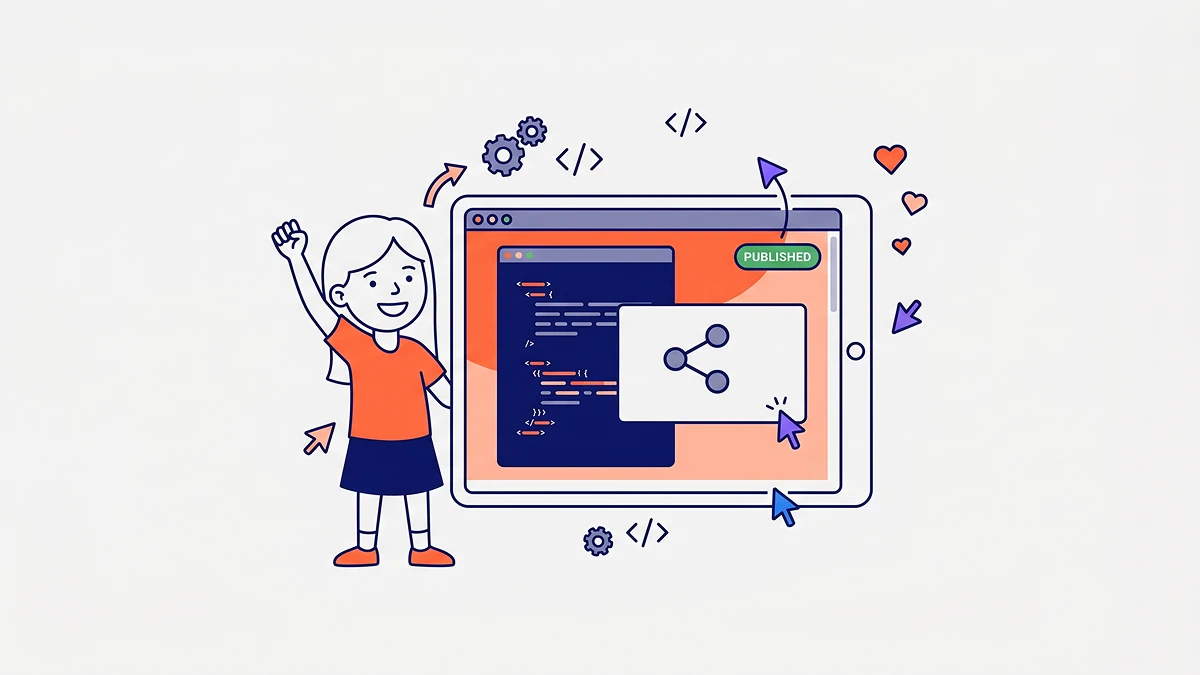
There's a gap between learning to code and publishing something real that anyone in the world can open in a browser. Real coding projects for kids don't stop at the lesson. They end up somewhere, with a URL, working for users who aren't the teacher. Most students close the first part of that distance. Very few close the second. Zoe, a Grade 10 Strive student, closed both.
Zoe joined Strive two and a half years ago with one goal: to follow a passion and find out what's truly possible through code. Last month, she found out.
What Zoe Built
Zoe's quote generator is a fully deployed web application. Open it and you get animated card flips, custom images positioned through code, and a colour scheme she designed and refined herself. It's live at quote-generator-inky-tau.vercel.app, and anyone can use it right now. It's not a school project submitted to a teacher. It's not a tutorial clone built by following someone else's steps. It's hers.
Building something like this requires making decisions that a tutorial doesn't cover. Zoe chose to use framer-motion, a professional animation library, and installed it as a dependency in her project. That detail is worth pausing on. Installing a third-party dependency means reading documentation, understanding how an external API works, and integrating someone else's code with your own in ways that require genuine comprehension. It's the move a working developer makes when they assess a problem and decide a specific tool is right for the job. Zoe made that decision independently.
She also made design decisions at every step: which images to include, how to position them, which colour palette felt right, and how to iterate when the first version didn't look the way she'd imagined. These aren't narrow coding decisions. They're the same judgement calls a junior developer makes when they own a piece of software.
The Difference Between Learning and Shipping
Most students who learn to code stop at the point where their code works on their own machine. Deploying to a live URL is a different category of experience. The code has to function in production, the deployment has to be configured correctly, and the end result has to work for a user who isn't you and who will find errors you didn't anticipate.
Zoe did all of that. And she did it not because she was walked through it step by step, but because she had developed the judgment to work out what she needed and the confidence to see it through.
This is what Strive means when we say coding is a mindset and not just syntax. The goal isn't students who can reproduce code in a structured lesson. It's students who can identify what they want to build, figure out how to build it, and ship something real.
What This Tells Us About How Kids Learn
Zoe's project isn't exceptional because she's unusually talented. It's what becomes possible when a student has genuine challenge, enough time to develop mastery, and a curriculum that treats them as a developer in training rather than a passive learner.
Every student at Strive works on projects that belong to them. The brief comes from them. The creative and technical decisions are theirs. What they build, they own. That ownership changes everything about how a student relates to difficulty. Zoe didn't stop when something was hard. She kept going because the outcome mattered to her.
Two and a half years ago she joined to find out what was possible. This is what's possible.
To see what your child can build, Strive Coding is where that journey starts.