How a Teacher Can Make All the Difference
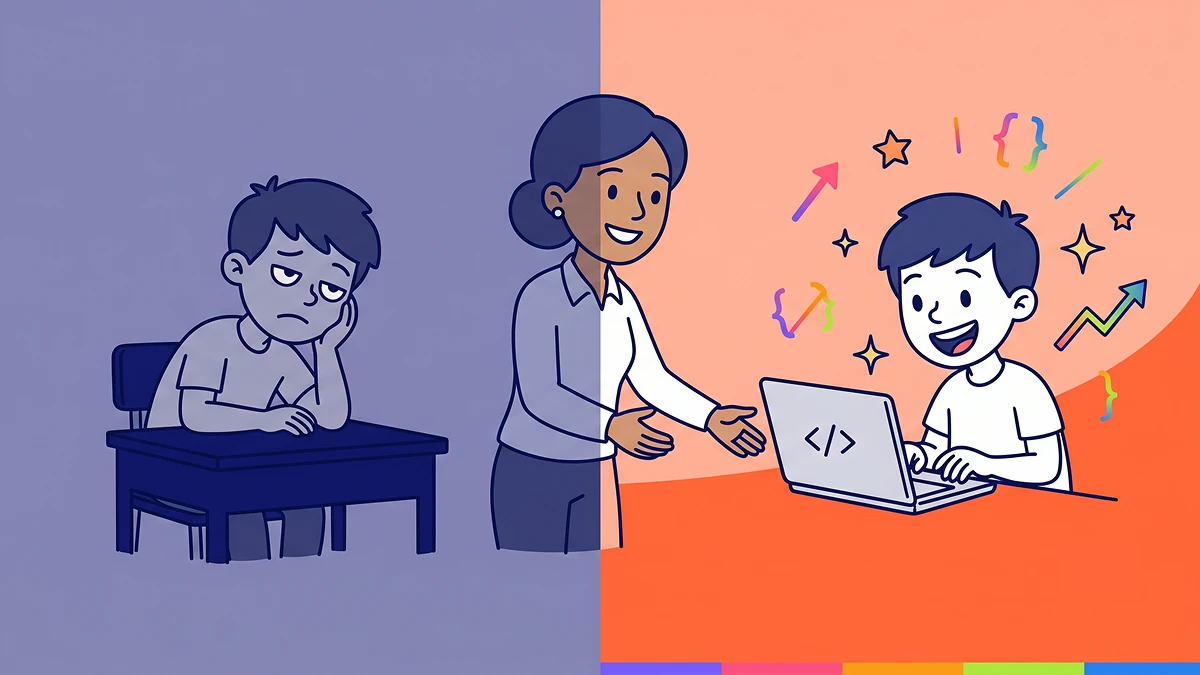
When a child says they don't like coding, the problem is rarely coding. In most cases, one early experience with the wrong coding teacher set the default, and it stayed there. One better experience can reset it just as quickly.
Why the First Coding Class Sets the Default
At Strive, we hear a version of this from parents regularly: "Eddie doesn't want to be a programmer. He doesn't like coding." When we ask what happened, the story tends to follow a familiar pattern.
Their child took a class somewhere. The teacher delivered the same lesson they use for every student, regardless of age, background, or interest. The content was abstract. There was nothing to build, nothing visible to take away at the end. The child wasn't having fun and left with a firm conclusion: coding is not for me.
This mirrors what happens when a child says "I hate maths" after one difficult year, or "geography is my favourite subject" because one teacher made every lesson feel like an adventure. A child's first experience with a subject shapes how they feel about it for years. A bad first class can lose more than one session. In some cases, it closes the door to the subject entirely.
What a Good Coding Teacher Actually Does
When Eddie joined Strive, his teacher focused on one thing: making the first session worth coming back to.
The teacher started by finding out what Eddie was actually interested in, then built the lesson around that. Instead of abstract exercises that could apply to anyone, Eddie was working on something that felt like his. That shift alone changes how a child shows up in a lesson.
From there, the teacher guided Eddie to build visual, interactive projects through doing rather than watching a demonstration and copying steps. Within one hour, Eddie had something on screen he could point to and explain. That kind of early, visible result is powerful: it reframes coding from "something I struggle to follow" into "something I can actually make."
Throughout the session, the teacher celebrated every small success. Confidence in coding builds through accumulated moments where a child feels genuinely capable, as much as it does from working through difficulty. Eddie left that class feeling good about himself and about coding, and it became his passion.
What Changes Is the Teaching, Not the Child
At Strive, we've seen children walk in convinced they're "not technical," sit through a single trial class, and walk out asking when the next session is. That shift comes from having a coding teacher for kids who made the subject feel accessible and worth pursuing, often for the first time.
How a child is taught matters more than any natural aptitude they arrive with.
If your child has written off coding after one bad experience, that experience probably tells you more about the class than about your child. A trial session with a Strive teacher is often all it takes to find out what coding feels like when it's taught well.